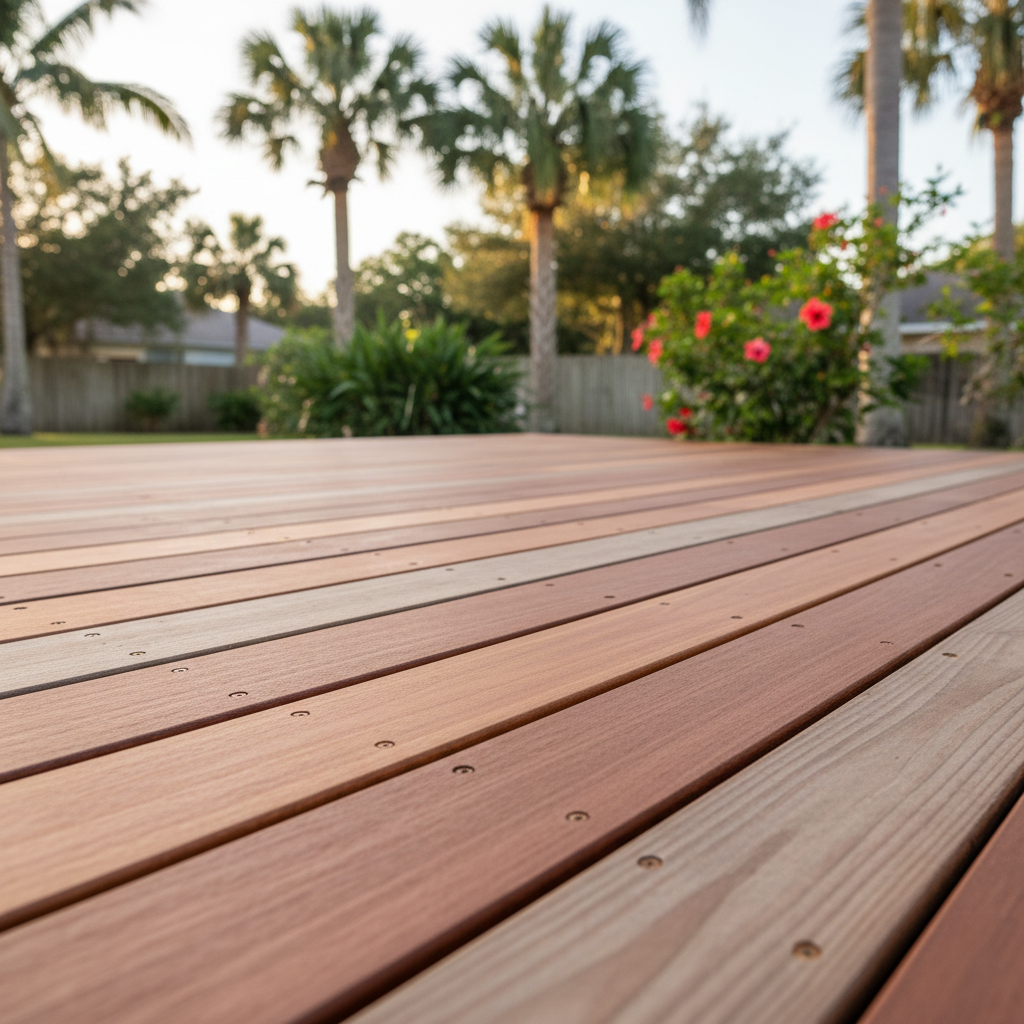
Homeowners in College Park who walk out onto their backyard deck and feel an unusual bounce under their feet are dealing with more than just a minor annoyance. In Central Florida, the combination of intense afternoon downpours, relentless humidity, and sandy soil creates a brutal environment for outdoor wood. Orlando Deck Construction frequently gets called out to fix rotting boards and unstable frames. Property owners often have many questions when their decks start falling apart.
How can I tell if my deck is actually rotting or just dirty?
Grime and mildew can make a healthy deck look rough after a wet summer, but rot gets deep into the fibers. Homeowners can grab a flathead screwdriver and press the tip into the wood, especially near post bases, ledger boards, and anywhere water pools. If the metal sinks in easily, the wood has rot. Surface mildew just wipes away with a cleaner, but soft wood means structural compromise. Orlando Deck Construction recommends addressing these soft spots before structural failure occurs.
Why are my deck posts sinking into the Orlando soil?
Central Florida has loose, sandy soil in many neighborhoods, ranging from Winter Park out towards Avalon Park. If the original builder did not dig deep enough concrete footings or skipped them entirely, a heavy deck will start to shift and sink. Once those support posts drop even an inch, the whole frame gets thrown out of alignment. Homeowners often notice railings pulling away from the house and doors sticking. Fixing this issue requires jacking up the deck section by section and pouring proper footings that reach stable earth.
Can I just replace a few rotted boards myself, or do I need a pro?
Replacing a few pressure-treated pine boards is manageable on a Saturday if you have a circular saw and a drill. However, surface boards are often just the first sign of a larger problem. If your decking is rotting from the bottom up, your joists and ledger board are likely in worse shape because they stay damp longer. If you pull up old boards and find the framing members spongy or crumbling, you should call Orlando Deck Construction to handle the structural repairs safely.
How do I know if my ledger board is pulling away from the house?
The ledger board is the single most important piece of wood on an attached deck, and it is also the number one point of failure. Property owners should inspect the spot where the deck meets the stucco or siding. If you see a gap opening up, flashing missing, or rust streaks running down the wall from the bolt heads, water is getting trapped behind that board. This rots the rim joist of your house and compromises the fasteners. Re-securing a failing ledger requires specialized structural screws and proper flashing integration.
Is it worth repairing an old pressure-treated deck, or should I just rebuild?
If the core framing is sound, meaning the posts, beams, and joists are solid southern yellow pine without major decay, repairing surface decking and railings makes financial sense. But if you are replacing more than half the framing members, you are paying labor for a new build piece by piece. At that point, property owners are better off tearing the structure down and starting fresh, or upgrading to a composite material that resists rot. Orlando Deck Construction provides Deck Construction services for homes in Orlando.
Keeping up with small repairs before they snowball into major structural overhauls saves homeowners thousands of dollars down the road. Check your framing twice a year, keep the leaves blown off so moisture does not trap, and deal with soft spots the second you find them. For homes and businesses in Orlando, Orlando Deck Construction provides Deck Construction services.